

Air Jordan The Shoe That Changed Everything
Air Jordan The Shoe That Changed Everything
In 1985, one pair of sneakers didn’t just hit the courts; it shattered the rules, ignited a subculture, and redefined the intersection of sports, fashion, and marketing forever. More than mere footwear, the Air Jordan 1 emerged as a powerful symbol of rebellion, a testament to athletic genius, and a monument to commercial audacity. This wasn’t just another shoe release; it was a daring gamble by Nike, built around a rookie sensation named Michael Jordan, and propelled by the now-legendary NBA ‘banned’ narrative.
This article will dissect how the Air Jordan 1’s groundbreaking design, revolutionary marketing, and undeniable cultural resonance created a seismic shift that continues to influence the entire sneaker industry today, shaping trends, consumer behavior, and brand strategies across the globe. From humble beginnings to global icon status, its journey is a fascinating chronicle of innovation and impact.
What Was the Sneaker Landscape Like Before Air Jordan’s Arrival?

How Did Function, Not Fashion, Define Athletic Footwear Pre-1985?
Before the mid-1980s, the athletic footwear market was largely dominated by designs prioritizing pure functionality. Brands like Converse with their Chuck Taylor and Adidas with the Superstar offered durable, practical shoes designed primarily for performance on courts or tracks. Aesthetics were secondary, often confined to simple, largely monochromatic color schemes that blended into the background rather than stood out. The emphasis was squarely on providing adequate support and grip for athletes, with little to no focus on individual expression or off-court style.
The concept of a “team shoe” prevailed, where all players wore similar models, reinforcing unity over individual star power. This starkly contrasts the coming “signature shoe” era. To understand this paradigm shift more deeply, explore The Evolution of Sneaker Culture in the USA, which details how the market gradually transformed from utility-first designs.
Why Did Athletic Shoes Mostly Stay on the Court and Separate from Street Style?
In the pre-Jordan landscape, a clear, unspoken division existed between sportswear and casual fashion. Athletic shoes were strictly for their intended purpose – sports. They lacked the intrinsic “cool” factor or aspirational narrative that would later transcend their functional roots. While some athletes wore them, they weren’t fashion statements. People didn’t collect them, debate their aesthetics, or line up for new releases. Street style was a different domain, largely dominated by loafers, boots, or dress shoes, reinforcing the idea that performance footwear belonged exclusively on the playing field, a far cry from the ubiquitous sneaker culture we recognize today.
How Did the Air Jordan 1 Make its Debut as a True Rebellion?
What Groundbreaking Design Elements Set the Air Jordan 1 Apart?
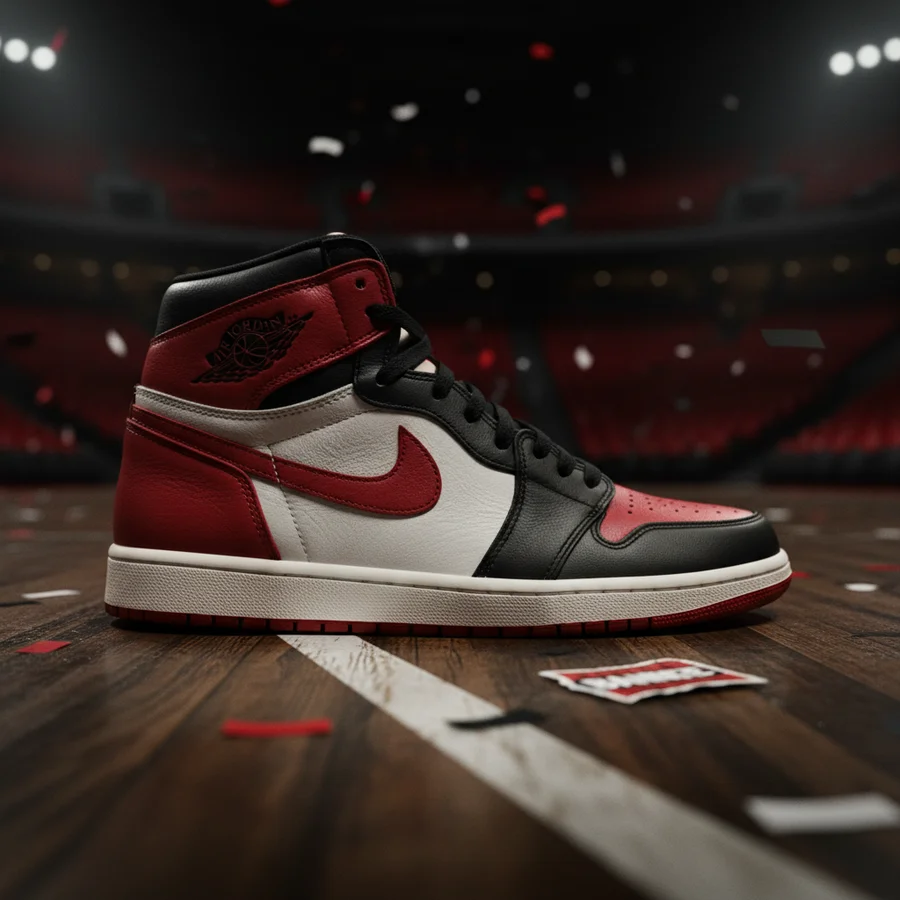
The Air Jordan 1 was a visual declaration of defiance, largely due to Peter Moore’s bold design choices. Departing from the norm, it featured a high-top silhouette that commanded attention and offered unparalleled ankle support, while its striking color-blocking was unprecedented. The initial “Bred” (black and red) and “Chicago” (red, white, and black) colorways shattered the monochromatic convention, making a vivid statement both on and off the court. Crafted from premium leather, these shoes exuded a luxury rarely seen in athletic footwear, instantly elevating them from a simple gym shoe to a product of desire. The addition of the now-iconic “Wings” logo, created by Moore and inspired by a pilot’s badge, sealed its identity, embedding a sense of flight and freedom into its very core.
Why Was Michael Jordan’s Charisma the Perfect Catalyst for a Revolution?
Nike took an extraordinary gamble, building an entire shoe line around a rookie who had yet to play an official NBA game. This unprecedented move was a testament to their foresight in recognizing Michael Jordan’s unique talent and unparalleled charisma. Jordan’s electrifying performance on the court, coupled with his magnetic personality and soaring athleticism, perfectly embodied the shoe’s disruptive and aspirational spirit. His incredible dunks, gravity-defying moves, and winning mentality provided the ultimate validation for a shoe that promised to make wearers feel exceptional. Jordan didn’t just wear the shoe; he lived its story, connecting it to excellence and an untamed spirit, which created an instant, powerful resonance. To grasp the broader influence, consider how Celebrity Athlete Influence on Sneaker Trends has shaped market dynamics over time.
What is the ‘Banned’ Legend and How Did It Fuel the Shoe’s Rebellious Debut?
The “banned” legend is arguably one of the greatest marketing coups in sports history. The NBA’s uniform rules at the time mandated that players’ shoes must be predominantly white and match their teammates’ footwear. Michael Jordan, with Nike’s explicit encouragement, donned the black and red “Bred” Air Jordan 1s. The NBA reacted by fining him an infamous $5,000 for each game he wore them. Nike not only gladly paid the fine but seized the opportunity, crafting a legendary advertising campaign that highlighted the shoe’s defiant nature: “On October 15, Nike created a revolutionary new basketball shoe. On October 18, the NBA threw them out of the game. Fortunately, the NBA can’t stop you from wearing them.” This brilliant strategy transformed a potential setback into priceless publicity, imbuing the Air Jordan 1 with an anti-establishment allure that cemented its revolutionary status in popular culture and fueled demand exponentially.
In What Ways Did the Air Jordan 1 Reshape Fashion and Street Style?
How Did Basketball Shoes Become a Central Piece of Street Fashion?
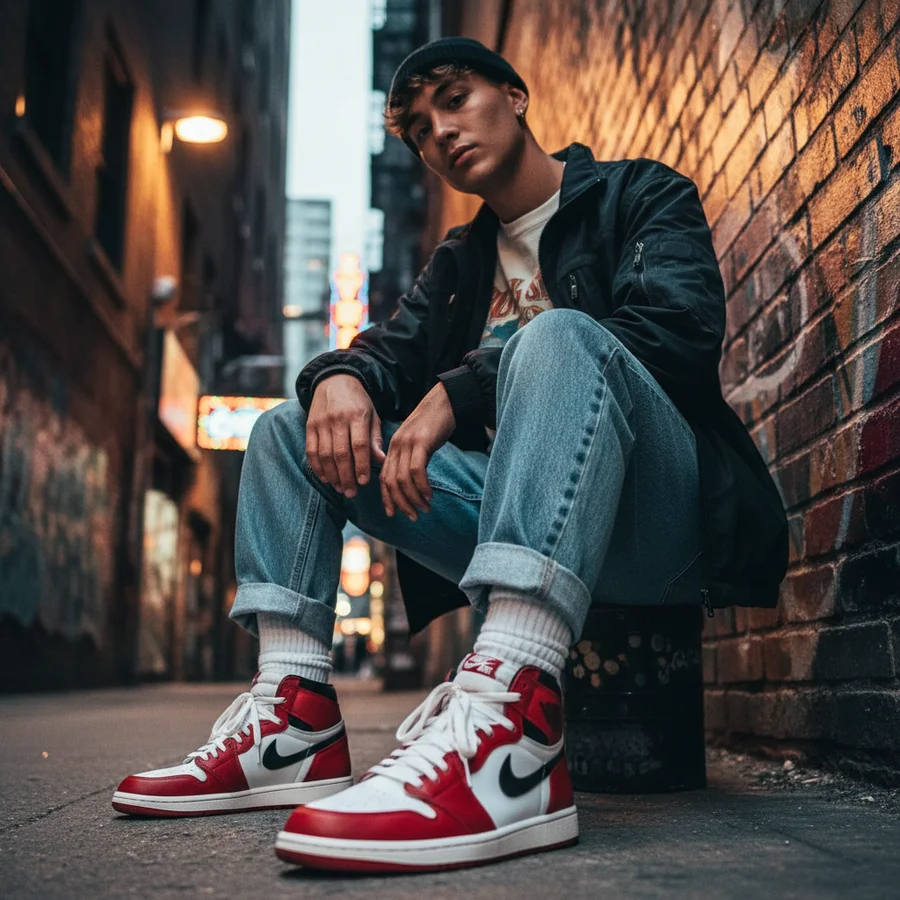
The Air Jordan 1 broke down the walls between athletic performance and everyday style. Prior to its arrival, performance basketball shoes rarely transitioned seamlessly into mainstream fashion. The AJ1, however, with its bold aesthetics and aspirational narrative, became the first true performance basketball shoe to achieve this monumental crossover. It quickly transcended its athletic origins, finding its way onto the feet of hip-hop artists, skateboarders, and urban youth. It was adopted not just as comfortable footwear but as a powerful status symbol and a declaration of individuality. Its integration into these early subcultures proved that sneakers could be more than just athletic gear; they could be a central component of one’s identity and street style. This transition is comprehensively explored in our article From Basketball Court to Street Basketball Shoes Become Fashion Icon.
Why is the Air Jordan 1 Considered a Timeless Design?
Beyond its initial revolutionary impact, the Air Jordan 1 boasts a design that has proven remarkably timeless. Its clean lines, robust high-top silhouette, and distinctive color-blocking lend it an unparalleled versatility. It can be effortlessly paired with diverse outfits, from casual jeans and t-shirts to more tailored suits, making it a staple in various wardrobes. The genius of its design lies in its ability to be constantly re-imagined without losing its core identity. Through countless new colorways, premium material updates, and high-profile collaborations, the AJ1 continuously refreshes its appeal, ensuring it remains culturally relevant for every new generation of sneaker enthusiasts and fashion-forward individuals. Its enduring aesthetic appeal is a testament to its master craftsmanship and revolutionary vision.
Ready to experience this timeless appeal? Explore the full Air Jordan Collection at Cushiow and find your perfect pair.
How Did the Air Jordan 1 Fundamentally Revolutionize Sports Marketing and Retail?

What New Economic Models in Retail Did the Air Jordan 1 Create?
The Air Jordan 1 did more than sell shoes; it invented a new economic model within retail. Its unprecedented popularity and strategic scarcity strategies gave birth to what we now know as “sneakerhead” culture. Limited releases became an event, generating frenzied demand, long lines stretching for blocks, and a dedicated community obsessed with the “hunt” for rare pairs. This scarcity model fueled the emergence of a lucrative secondary resale market, transforming sneakers from mere apparel into legitimate financial assets and collector’s items. Suddenly, a pair of shoes could appreciate in value, leading to a new class of investors and entrepreneurs operating outside traditional retail channels. The AJ1 essentially laid the groundwork for the modern hype economy in fashion.
Why Did the Success of One Shoe Lead to the Independent, Multi-Billion-Dollar Jordan Brand?
The explosive and sustained success of the Air Jordan 1, and subsequent models, was irrefutable proof of a revolutionary concept: a signature athlete brand could be far more powerful and profitable than just another product line. The shoe’s incredible revenue generation and cultural penetration convinced Nike to take an unprecedented step – spinning off “Jordan Brand” as a standalone entity within the Nike Inc. umbrella. This was a first in the industry, granting the brand a level of creative and commercial autonomy unheard of for a single athlete’s endorsement deal. It allowed the brand to develop its own identity, expand into apparel, and sign other athletes, ultimately growing into a multi-billion-dollar empire that transcends its founder and its parent company.
What Marketing Brilliance Transformed a Controversy into an Aspirational Narrative?
The infamous “banned” story wasn’t just good luck; it was a masterclass in marketing ingenuity. Nike consciously decided to embrace the NBA’s prohibition, transforming a potential negative into the ultimate badge of defiance. The powerful narrative of a daring young superstar breaking the rules, backed by a brand willing to pay the price for pushing boundaries, created an aspirational image that resonated deeply with youth culture. Iconic “Flight” ad campaigns, featuring Jordan defying gravity and expectations, further solidified this narrative, selling a dream of limitless potential and individuality, rather than just selling rubber and leather. This shrewd strategy set a new benchmark for how athletic sponsorships and controversies could be leveraged, shaping The Jordan Legacy How Air Jordan Remains Relevant for decades.
How Does the Air Jordan 1 Continue to Influence Sneaker Culture Today?
What Role Do Strategic Collaborations Play in Keeping the Air Jordan 1 Relevant?
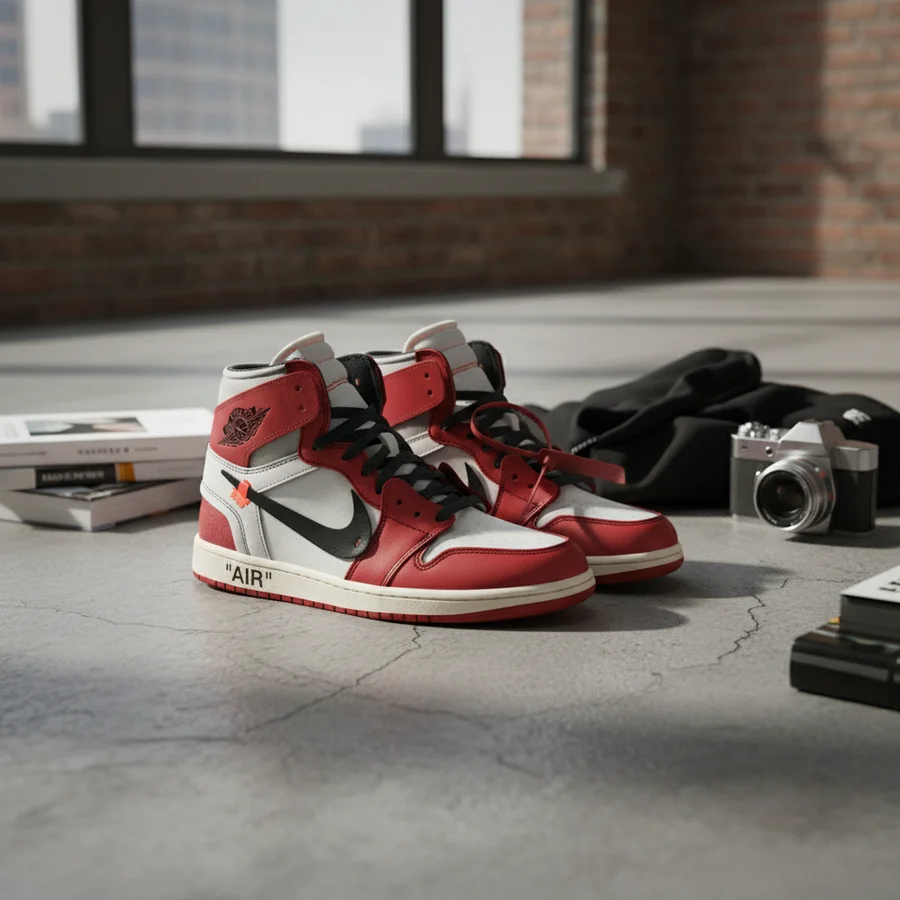
In the contemporary sneaker landscape, strategic collaborations are a cornerstone of the Air Jordan 1’s enduring relevance. Partnerships with high-profile designers, fashion houses, and cultural figures—such as Off-White, Travis Scott, Dior, and A Ma Maniére—breathe new life into the classic silhouette, introducing it to entirely new audiences, often outside traditional sneaker circles. These collaborations transcend mere color palette changes; they transform the AJ1 into a canvas for high fashion, art, and storytelling, solidifying its status not just as a sneaker, but as a cultural artifact that continually redefines luxury and street appeal. This approach ensures that the Air Jordan 1 remains at the cutting edge of trendsetting and consumer desire. To learn more about this phenomenon, explore Collaborations that Shaped Sneaker Culture.
Why Does the Concept of “Retro” Releases Keep the Legacy Alive?
The concept of “retro” releases is vital to maintaining the Air Jordan 1’s perpetual hype and accessibility across generations. By consistently re-releasing original and beloved colorways from the 1980s and 90s, Jordan Brand allows newer fans to acquire a piece of sneaker history that they might have missed initially. These retros are often produced with meticulous attention to detail, attempting to mimic the shape, materials, and overall feel of the original pairs. This strategy generates consistent excitement and demand, introducing the iconic stories and designs to fresh audiences while catering to the nostalgia of older enthusiasts. It’s a powerful cycle that ensures the Air Jordan 1’s legacy remains vibrant and sought after, solidifying its place as a perennial classic in sneaker culture. For an in-depth look, consult Air Jordan 101 Complete Guide to Every Version.
In conclusion, the Air Jordan 1 was a perfect storm: a confluence of revolutionary design, the singular talent of a once-in-a-generation athlete, and audacious, genius marketing. It didn’t merely sell millions of shoes; it fundamentally created a new market, defined an entire culture, and established the definitive blueprint for athlete endorsements that continues to reverberate and influence brand strategies decades later. The Air Jordan 1 is more than a sneaker; it is a cultural artifact, a design masterpiece, and the undisputed starting point for the modern sneaker world as we know it today.
Ready to own a piece of this revolutionary history? Shop the iconic Air Jordan 1 Collection at Cushiow and walk in the footsteps of a legend.
Frequently Asked Questions about the Air Jordan’s Impact
Why was the original Air Jordan 1 so controversial?
The original Air Jordan 1 in the “Bred” (Black and Red) colorway violated the NBA’s uniform rules at the time, which required shoes to be predominantly white. The NBA fined Michael Jordan $5,000 each time he wore them, a penalty Nike happily paid for the rebellious marketing it generated.
How much did the first Air Jordan 1s cost?
When the Air Jordan 1 was released to the public in 1985, it retailed for $65. This was considered a premium price for a basketball sneaker at the time, helping to establish it as a high-end product.
Did Michael Jordan actually want to sign with Nike?
Initially, Michael Jordan’s preference was to sign with Adidas. However, Nike offered him an unprecedented deal that included his own signature shoe line—something other brands were not offering. This revolutionary proposal ultimately won him over.
What is the difference between an Air Jordan 1 Retro and the original?
The “original” Air Jordan 1s were the pairs produced and sold in 1985-1986. An Air Jordan 1 “Retro” is a re-release of the original model, produced in a later year. Retros often feature minor changes in materials or shape but aim to replicate the iconic look of the originals for new generations of fans.
How did the Air Jordan 1 start sneaker culture?
The Air Jordan 1 catalyzed sneaker culture by being the first shoe to create massive consumer hype, limited availability, and a narrative that transcended sports. Its popularity led to people collecting different colorways, a booming resale market, and the overall mindset of sneakers as collectible, valuable fashion items.